News is in CHRONOLOGICAL order  - Updates at the bottom

2002 News
March 2002 News
Speicher home page


A  Must-See Tribute

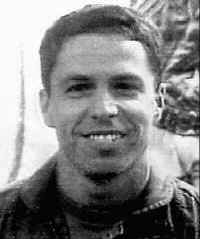
SPEICHER, MICHAEL SCOTT

Name: Michael Scott Speicher
Rank at Loss/Branch: Lt.Cdr./US Navy
Rank in 2002: Commander
Unit: USS SARATOGA
Age at Loss: 33, 
Born: March 1958
Age in 2002: 44
Home City of Record: Jacksonville FL
Date of Loss: 17 January 1991
Country of Loss: Unknown
Loss Coordinates:
Original Status: Missing in Action
Status Changed to KIA/BNR May 1991
Status changed BACK to MIA 01/10/01

The U.S. Navy has changed the status of Gulf War pilot Scott Speicher from missing in action to missing-captured 10/11/2002


"Spike"
date of photo unknown


More on the Second Set of M S S Initials March 28, 2004, an article by Wes Allison of the St. Petersburg Times reports: “Late last year, soldiers found another set of MSS initials on the  post of a carport at a detention center near Tikrit, Saddam Hussein's hometown, an aide to U.S. Sen. Bill Nelson, D - Fla., told the St. Petersburg Times last week."

National Alliance of Families 03/28/2004

==================================
U.S. Veterans Dispatch/1996
Ted Sampley

Lt. Cmdr. Micahel S. Speicher: Expendable

There is no chance Lt. Cmdr. Michael S. Speicher survived, Defense Secretary Dick Cheney assured the American people within hours of the Navy pilot's failure to return to the aircraft carrier Saratoga on the night of Jan. 16, 1991. He was last heard from over Iraqi flying northeast toward Baghdad.   

Speicher, 33, of Jacksonville, Fla, was the first U. S. pilot shot down in the Gulf War. He left a wife, a 3-year-old daughter and a 1-year old son.   

On Jan. 18, 1991, less than 48-hours after Speicher became missing, the Pentagon said his single-seat FA-18 Hornet fighter bomber was shot down by an Iraqi surface-to-air missile. The plane "exploded to bits" in the sky after being hit.   

"Evidently, pieces of the plane were strewn all over the Iraqi landscape and Speicher's wing mates saw it happen," the official said.   

So, if Speicher and his aircraft "exploded to bits" all over the Iraqi sky in 1991, why, in December 1995, did a Pentagon team go to Iraq On a secret mission to look at the wreckage of Speicher's fighter end to search for his remains?   

The search mission, which was led by the International Committee of the Red Cross and undertaken with the approval of Iraqi President Saddam Hussein, found the wreckage virtually intact and upside down.

Pentagon spokesman Bev Baker said the U.S. team, which conducted a week long excavation and search of the site, found "no human remains" in the wreckage or around the crash site.   

Evidence is now surfacing indicating that Speicher parachuted from his plane, landed safely, was alive on the ground and later captured. These revelations have the Pentagon scrambling for cover. Naval intelligence is now saying they were never sure why Speicher's plane disintegrated in midair. They now conclude he either had a freak midair collision with an Iraqi MIG-25 or that the enemy plane shot him out of the sky.   

Pentagon officials told the press in December that a parry of hunters discovered the crash site of Speicher's Navy FA-18 two years ago and that as a result, a U.S. spy satellite photographed the crash site. Intelligence officials conveyed the images to the POW/MIA office at the Defense Department. Secretary of State Warren Christopher contacted the Red Cross in Baghdad and requested its assistance.   

"Not exactly," a Capitol Hill source familiar with the case told the U.S. Veteran Dispatch.

"A couple of years ago, Naval Intelligence picked up a story that Speicher had survived the shoot down and was captured by the Iraqis," the source explained.   

"As a result, Pentagon intelligence went back and looked at old satellite imagery of the Speicher crash site which was in a wasteland far from civilization. Beside Speicher's ejection seat located on the ground several miles away from the wreckage of the aircraft' the analysts found the image of a two-letter Escape and Evade (E and E) symbol used by downed pilots to indicate they are alive and want to be rescued.   

"They also checked the debriefs of other pilots who had been shot down and released from Iraq. They may have even reinterviewed some of the former prisoners. One pilot said he was told by his Iraqi captors that 'the guy in the FA-18 shot down on the first day is on the run and we're going toe catch him," the source said.   

When asked if it was true that the Pentagon had satellite imagery of Speicher's ejection seat and E and E code, Baker said "The Pentagon does not discuss intelligence reports."

She said it was still the position of the Department of Defense that Speicher was killed in action, body not returned, and that pilot
observation remained the basis of that conclusion. 

The U.S. government's rush to declare Speicher dead is a glaring example of the Pentagon's secret policy of writing off military personnel who become captured or missing during a conflict as "expendable."   

As servicemen and women start falling into the hands of an enemy, the Pentagon simply declares them missing in action and denies all knowledge of Americans being captured. If some of the missing are resumed alive at the end of hostilities, it is a plus for the Pentagon. For those who are not returned, it is easier for the Pentagon to close the book by declaring them killed in action, body not returned.   

Even after Cable News Network (CNN) reported Iraq's minister of information saying that American pilots had been captured and that reporters would be allowed to meet with them, the Pentagon denied knowledge of any Americans being captured.   

"We know of no American prisoners of war," Lt. Gen. Thomas Kelly, operations director for the Joint Chiefs of Staff, said when asked by reporters if Iraq were holding any U.S. prisoners of war.   

Only after video interviews of allied POWs were broadcast on Iraqi television and later in the United States did the Pentagon officially declare that the Iraqis were holding U.S. prisoners.   

It was nearly two weeks after 20-year-old Army Spec. Melissa Rathbun-Nealy and 23 year-old Amy Spec. David Lockett disappeared before the Pentagon officially declared them missing in action.   

The Pentagon had held the two absent without leave (AWOL) despite eyewitness accounts from American servicemen who saw them being captured and reports that a captured Iraqi soldier had said he helped transport two Americans, a white female and a black male (Nealy is white and Lockett is black.) to Basra, a key Iraqi command center north of Kuwait.   

Nealy's father, Leo Rathbun, took matters into his own hands and appealed directly to Saddam Hussein asking him to acknowledge his daughter as a prisoner of war.   

Rathbun told The Grand Rapids Press that he did not want his daughter forgotten if a peace plan calling for the release of all prisoners were to be signed.   

"The Army has not recognized Melissa as a POW and if the war ends, I believe the Bush administration would ignore the problem of MlAs and POWs just as previous administrations ignored the MIAs and POWs still thought to be held in Vietnam," Rathbun said in the interview.   

Neither the U.S. or Iraqi governments officially acknowledged that Nealy and Lockett were prisoners of war until they were released in February 1991.   

Is Speicher alive? There certainly is evidence that he was alive after being shot down and in the absence of credible evidence proving him dead, all Americans must demand his immediate release.   

Dozens more like Speicher are missing as a result of the war with Iraq and only the Pentagon knows exactly how many.   

The Pentagon has always lied to the American people about U.S. servicemen known to be captives of an enemy. The Iying is as deadly for the captured and missing as an enemy bullet and it is time for it to stop. We must demand that our government be absolutely honest and accurate in accounting for our missing servicemen.   

Otherwise, those brave men and women now serving our country in Bosnia will also be treated as expendable, abandoned to the enemy and allowed to disappear.   

That is exactly what happened to Lt. Cmd. Speicher and many unfortunate U.S. servicemen captured in Korea, the Cold War, Vietnam and in the Gulf.

======================================
March 19, 1999

The Honorable Richard Danzig
     Secretary of the Navy
     Pentagon, Room 4E686
     Washington, D.C. 20350-1000    

Dear Secretary Danzig:

        We are writing to request that you use your authority under Title 37, USCS, Section 555 (a) and 556 (d) to reconsider and
change or modify the "finding of death" determination made by the Secretary of the Navy's designee on May 22, 1991 with respect to Lt. Cmdr. Michael Scott Speicher, USN.  We strongly believe, for the reasons noted below, that such action is indeed "warranted by information that has been received and other circumstances," as provided for in the above-cited law.  We have further been advised that status determinations with respect to Lt. Cmdr. Speicher are not currently covered by the Missing Persons Act, Title 10, USCS, Sections 1501-1510, as amended, thereby making action under Title 37 appropriate.    

        Lt. Cmdr. Speicher was the first American to be listed as missing in action when his F-18 was lost over Iraq during a combat strike mission in the first hours of the Gulf War in January, 1991. When the war ended, the Iraqi Government returned a "soft tissue fragment and hair bearing skin" which allegedly related to Lt. Cmdr. Speicher. However, subsequent DNA tests determined the remains were not those of Lt. Cmdr. Speicher.    

        The Navy convened a Status Review Board on May 20, 1991 to consider the state of evidence at that time related to Lt. Cmdr. Speicher's loss.  On May 22, 1991, the late Admiral Mike Boorda, then Chief of Naval Personnel, approved and signed out the board-recommended "finding of death" which resulted in Lt. Cmdr. Speicher's status being changed from missing in action to killed in action.       

        In December, 1993, a Qatari official and his hunting party came upon Lt. Cmdr. Speicher's aircraft wreckage in Iraq.  He
immediately forwarded to U.S. military officials pictures of the plane's canopy, a shard of metal with serial numbers, and passed on his recollection of having seen the ejection seat as well.  Two years later, in December, 1995, U.S. crash site specialists from
the Department of Defense were permitted to access the crash site, following coordination efforts between the Iraqi Government and the International Committee of the Red Cross.  The results of the crash-site investigation were briefed to the Congress in the winter and spring of 1996.  In December, 1997, we were further briefed on this matter by the Principal Deputy Assistant Secretary of Defense for International Security Affairs, Frederick Smith, in response to concerns generated by the attached New York Times story.    

        In February, 1998, a classified follow-up briefing on this case was provided to the Senate Select Committee on Intelligence by the Department of Defense POW/Missing Personnel Office (DPMO).  In September, 1998, pursuant to our earlier inquiries on this matter, the Intelligence Community and the Department of Defense provided to the Senate Select Committee on Intelligence a classified chronology outlining Intelligence Community activities bearing on the issues raised as a result of Lt. Cmdr. Speicher's loss.  The briefing materials and the chronology referenced above are available for your review.  We strongly believe that the information contained therein supports the request we are making of you with this letter.

        During the last three years, we understand that the Department of Defense has refused to authorize any further approaches to the Iraqi Government concerning the fate of Lt. Cmdr. Speicher "because of the state of U.S.-Iraqi relations."  Nonetheless, our offices were informed during a briefing we received on March 12, 1999 that the official publicly-stated position of the Department of Defense POW/Missing Personnel Office (DPMO) with respect to whether the available evidence indicates Lt. Cmdr. Speicher perished in his aircraft incident, is "we don't know."  As you know, the DPMO is charged with developing, implementing, and overseeing policy on unaccounted for U.S. personnel for the Department of Defense.    

        In view of the official position of the Department of Defense and the classified evidence now available to the Department of the Navy, we believe that the justification for the finding of death determination in May, 1991, is no longer valid and conclusive.  We,  therefore, urge you to use your statutory authority to change the status of Lt. Cmdr. Speicher back to "missing in action" -- a status that more accurately reflects the available evidence and provides a presumptive "benefit of the doubt" to Lt. Cmdr.      Speicher.  We owe nothing less to Lt. Cmdr. Speicher and his family.    

        We look forward to your response, and thank you for your personal attention to this very important matter that deeply concerns us.

                                  Sincerely yours,
    

       <Signed>                                  <Signed>
        BOB SMITH                                 ROD GRAMS
        United States Senator                     United States Senator

=================================

May 02, 2000

CBS News | The First Casualty

CBS NEWS BROADCASTS
The First Casualty

A Downed Gulf War Flier
Labeled 'Killed In Action'
But What Really Happened To Him?

(CBS) On January 17, 1991, the first night of the Gulf War, Lieutenant Commander Michael Scott Speicher was shot down over Iraq. He became the conflict's first American casualty.

But there's one problem: There is no evidence that he is dead. Bob Simon reports.

Speicher is the only American unaccounted for from the Gulf  war. When Speicher was officially declared killed in action in May of 1991, the U.S. military had never even looked for him.

Somewhere in the arid, desolate desert of western Iraq, Speicher's F-18 crashed in darkness two hours after the war began.

Speicher was one of the best pilots on the aircraft carrier Saratoga. He wasn't supposed to fly on the first mission of  the war but he refused to be left behind. "When it just came down to flying the airplane, there was nobody like Spike," says Barry Hull, another pilot in Speicher's squadron.

On January 17, Hull, Speicher, and 32 other pilots took off at 1:30 a.m. from the USS Saratoga in the Red Sea. They were supposed to suppress enemy air defenses west of Baghdad. It  was a very dangerous mission. 

 "The closer we got to Baghdad the more impressive the light show over Baghdad became," recalls Bob Stumpf, who was flying  two planes away from Speicher. "It was just an incredible anti-aircraft barrage."

Eight minutes from the target, Stumpf was startled by a huge flash in the sky. He assumed the blast was a missile, but he didn't think that any planes had been hit.

The fighters continued toward the target and dropped their bombs. As they turned back toward the Saratoga, the pilots checked in over the radio. Speicher didn't check in. The pilots returned to the Saratoga just before dawn without him.

During their intelligence debriefings on the ship, Dave Renaud, who had been the closest pilot to Speicher, reported seeing explosions five miles away, in Speicher's direction, at the same time Stumpf had witnessed that large flash in the sky. Renaud reported the plane had been blown to bits. He even drew a little circle on his map where he thought he had seen the fireball.

"The first report was 'airplane disintegrated on impact; no contact with the pilot; we really don't believe that anyone was able to survive the impact,'" says Admiral Stan Arthur, commander of all Allied Naval Forces in the Persian Gulf.

A few hours after the first mission had returned to the ships, Secretary of Defense Richard Cheney held a press conference in Washington. On the basis of one account of a flash in the night sky and 12 hours of radio silence, Secretary Cheney declared Speicher dead.

To Stumpf, the pronouncement seemed premature.

Why did Secretary of Defense Richard Cheney declare Speicher dead in the first hours of the Gulf War when there was no evidence to support it? Cheney declined to comment.

Admiral Arthur says that because the Navy wasn't sure where Speicher had gone down, no search and rescue mission was launched. But the captain of the Saratoga personally told Speicher's wife Joanne that "every effort continues to be made to locate Scott." A week later, Speicher's commanding officer sent this message to Joanne, "All, repeat, all, theater combat search and rescue efforts were mobilized."

On March 7, 1991, right after the war, Pentagon spokesman Pete Williams assured Americans the military would continue to look for every missing soldier and flier.

When the POWs were released at the end of the war, Tony Albano, who was Speicher's roommate, was sent to Saudi Arabia in case Speicher was among the prisoners being freed. He didn't see Speicher.

Weeks later, the Iraqis sent a pound and a half of flesh to the Americans, claiming it was the remains of a pilot named Michael. Speicher's first name was Michael and there was no other Michael among the missing. One DNA test and the case would be closed forever.

Then things got strange. That spring, Victor Weedn, a forensic pathologist, tested the flesh. He said it did not come from Speicher.

Were Saddam and the Iraqis trying to hide something, or had they just made a mistake?

Apparently no one asked, because the next day, May 7, the Navy began the process of officially  declaring Speicher KIA. "I was a little surprised at that because our test report didn't show that he was dead," Weedn says.

Joanne Speicher was asked to sign off on this decision. She thought all search efforts had been exhausted, so she agreed. While most of the country was celebrating its victory, a private memorial service was being held in Arlington National Cemetery. There was no body.

Speicher's case was closed. Then in December 1993 an Army general from Qatar came to the western Iraqi desert, 150 miles southwest of Baghdad. He and his party were hunting for rare falcons when they stumbled across an American F-18.

The condition of the nose suggested the plane had not disintegrated in the air. The Qatari took pictures, and pieces of the plane, to the American Embassy in Doha, the Qatari capital. The photos and a piece of radar equipment were sent to Washington, where a check was run on the serial numbers. The results stirred the Pentagon. Nearly three years after the Gulf War, Speicher's jet had been located.

The pictures showed that the canopy had come down away from the plane; this indicated that the pilot had tried to eject.

The Pentagon went back and checked the satellite imagery it used to track Scud launches during the war. It found a crash site, with the outlines of a jet in the sand - Speicher's F-18. The crash spot was right where his fellow pilot had said it was. But despite three years of assurances, no one in the U.S. government or the military had ever bothered to look for Speicher's plane.

Says Arthur: "You get this sinking feeling that there's something really wrong here, that you missed something."

Part II

Years Later, Search For Flier Continues Is He Alive In Iraq?
Investigators Will Now Try To Find Out

(CBS) In April 1994, Admiral Stan Arthur, who sent Michael Scott Speicher into battle, wanted to launch a covert mission into Iraq to check out the crash site. But some Pentagon policy officials were concerned about casualties. They wanted to ask Saddam for permission to go to the site under the Red Cross flag.

This approach enraged those who wanted the mission. "You don't preserve your options when you essentially announce to the Iraqi government that you know that you found a crash site, and you found something at the crash site that might lead you to conclude the pilot is alive," says Tim Connolly, who was then the deputy secretary of defense in charge of special operations as well as a Gulf War veteran with a Bronze Star.

"Because if, in fact, the pilot is alive and being held by the Iraqis, the pilot isn't alive anymore." Connolly also wanted to launch a covert mission.

Classified documents show that the chance of success for a secret mission was considered high. Connolly says that the area was very sparsely populated.

At a meeting in December 1994 in the Pentagon, Secretary of Defense William Perry and the chairman of the Joint Chiefs of  Staff, General John Shalikashvili, decided how to approach the site.

Connolly argued his case at the meeting. "I closed by saying, 'I will go out the door of this conference room and I will stand in the hall, and I will stop the first five people who walk by in military uniform, regardless of service or gender,'" Connolly recalls. "'I will explain to them what we are trying to do and ask them if they will get on the helicopter. And I will guarantee you that all five will get on the helicopter.' And then I shut my mouth. And the chairman said, 'I do not want to have to write letters home to the parents to tell them that their son or daughter died looking  for old bones.'"

The Pentagon nixed the covert mission. General Shalikashvili  would not talk to us about his decision.

On March 1, 1995, Saddam agreed to allow American experts to visit the crash site. But because of what Baghdad called  'unforeseen bureaucratic delays,' the Americans didn't visit  for nine months. 

When the U.S. team got there, they found the site had been tampered with. The cockpit was missing. The Iraqis had gotten there first.

But the Americans found a plane that had not disintegrated in the sky. They found the canopy, which ejects with the pilot, about a mile from the aircraft. Spent flares and parts of a survival kit also were located. There was not a bone or a drop of blood or a trace of Michael Scott Speicher anywhere.

But toward the end of their six-day search, the Americans found a tattered flight suit. Albano, who has examined the suit, thinks it is Speicher's.

There were definite signs Speicher could have survived an ejection. But when the crash team returned the Pentagon said that there was no evidence that Speicher had survived. In fact, the investigators reported that the crash site provided no evidence Speicher had died. The Defense Department now grudgingly acknowledges this.

"I don't believe we have any evidence that he's dead," says Connolly.

But if Speicher survived the crash, why didn't he send a rescue call on his radio? Pilots are repeatedly drilled on the importance of keeping their radios with them at all times during crashes. It is the key to getting rescued.

Minutes before Speicher took off, the pilots had been given new radios. These radios were larger than the previous models, and didn't fit in the vest pocket that had held the earlier models.

Even before the mission, the size of the radios worried Ted Phagan, who was in charge of the pilots' radios. "As the pilots are walking out I'm telling them, 'you're gonna lose this radio if you have to eject,'" he recalls. Phagan thinks Speicher lost his radio when he ejected. (By the second launch, Phagan had fixed the problem with a new flap.)

By mid-1996 even General Shalikashvili wrote to the CIA expressing his misgivings about Speicher's status.

Speicher is still listed as 'Killed In Action.' But with mounting evidence that he survived the crash, and without any evidence that he died, U.S. intelligence agencies are launching a new search. Investigators aren't ruling out the possibility - slim though it might be - that Speicher could be alive in Iraq.

American investigators say an Iraqi defector who had recently escaped to Jordan told them that in the first days of the war, he had driven an American pilot from the desert to Baghdad and the authorities. The pilot, he says, was alive, alert, and wearing a flight suit. The defector pointed Speicher out in a photo lineup, and passed two lie detector tests.

The head of the Iraqi Air Force, General Khaldoun Khattab, says that Iraq freed all the prisoners after the war. "It's possible he was seriously injured after he ejected from the plane, and there are lots of wolves in the area," Khattab says.

The case may never be solved. Admiral Arthur is tormented by the question of what happened to the flier.

"My worst fear was what happens if someday he shows up in Baghdad on a TV screen and it's a surprise to everybody," says  Arthur. "How would you explain that?"

===============================

Navy Changes Status of Gulf War Pilot

Updated 7:14 PM ET January 10, 2001

By ROBERT BURNS, AP Military Writer

WASHINGTON (AP) - In a highly unusual move, the Navy has changed the status of Lt. Cmdr. Michael Speicher, shot down in an F-18 fighter on the opening night of the 1991 Gulf War, from killed in action to missing, officials said Wednesday.

Navy Secretary Richard Danzig notified the Speicher family of the decision Wednesday, according to officials in the office of
Sen. Bob Smith, R-N.H., who has long challenged the Pentagon's official "finding of death" for Speicher. The officials discussed
the matter on condition they not be identified. Pentagon officials confirmed the information.

Pentagon officials said Danzig acted because of substantial evidence that Speicher may not have died in the crash.

"It's substantial in nature, in the totality," one official said. He would not elaborate. The official said the State Department sent a new diplomatic note to Baghdad demanding that the Iraqi government tell all it knows about Speicher's fate.

Last March, Smith and Sen. Rod Grams, R-Minn., asked Danzig to change Speicher's status to missing in action, reflecting evidence of doubt about whether he survived the crash. Smith met with Danzig again Dec. 20 on the matter, officials said.

In a letter dated Dec. 18, Sandy Berger, President Clinton's national security adviser, told Smith a recent intelligence assessment "has stimulated a high-level review of this case - several new actions are under way and additional steps are under intense review."

Berger's letter, which was provided to The Associated Press on Wednesday, did not specify what actions were contemplated.

Speicher, of Jacksonville, Fla., went missing when his Navy F-18 Hornet was shot down on Jan. 16, 1991, in an air-to-air battle with an Iraqi fighter. He was the first American lost in the war and the last still unaccounted for.

The late Adm. Mike Boorda, then the chief of naval operations, approved the official "finding of death" on May 22, 1991. That
action changed his official status from missing in action to killed in action.

In September 1998, after efforts by Smith and Grams to learn more about what U.S. intelligence agencies knew of Speicher's fate, the Senate Select Committee on Intelligence was given a classified chronology of the agencies' activities on the matter.

"We strongly believe that the information contained therein supports the request we are making of you with this letter," Smith
and Grams told Danzig in a letter last March. They did not cite any specific evidence, which is classified secret.

The senators said they were informed March 12 by the Defense Department's POW-Missing Personnel Office that its position on whether the available evidence indicates Speicher perished in the crash of his plane is, "We don't know."

Smith and Grams have said before that Pentagon officials initially told them evidence had not been found to indicate that
Speicher could have survived the crash. However, in May 1994 - more than three years after Speicher went missing - Pentagon officials indicated in a secret memorandum that a U.S. spy satellite had photographed a "manmade symbol" at the crash site earlier that year. Some military officers said they interpreted the symbol as a sign that the Navy pilot might have survived the crash.

Speicher was the only American killed on Iraqi territory whose remains were not recovered.

A plan was devised in 1994 to conduct a covert operation into Iraq to search the crash site for clues to Speicher's fate, but it
was scrapped in December 1994 by Army Gen. John Shalikashvili, then the chairman of the Joint Chiefs of Staff. The general ruled the risk of casualties was too high to justify the secret mission.

In 1995, U.S. crash site specialists from the Defense Department, working with the International Committee of the Red
Cross, entered Iraq with President Saddam Hussein's permission. When they got to the crash site they found it had been excavated, The New York Times reported in December 1997.

======================================

US Changes Pilot Status to 'Missing' After Gulf War

Updated 7:58 AM ET January 11, 2001
By Charles Aldinger

WASHINGTON (Reuters) - In an unusual step, the Navy has decided to change the status of a U.S. fighter pilot shot down
over Iraq early in the 1991 Gulf War from "killed in action" to "missing in action" because of evidence that he may have survived
the crash, Navy officials said on Thursday.

Navy Secretary Richard Danzig on Wednesday notified relatives of Lt. Cmdr. Michael Scott Speicher, who had been listed as
killed since shortly after the war, according to the officials who asked not to be identified.

Speicher became the first American lost on the first day of the air war when his Navy F-18 attack jet was apparently hit and
crashed in a fireball during a battle with Iraqi jets on Jan. 17, 1991.

Although no wreckage was initially found, defense officials said Pentagon documents showed U.S. spy satellites more than
three years later detected what was described as a man-made symbol at the crash scene. They declined to give details.

Although most of the information in the case is classified, officials said a flight suit that could have been Speicher's was
more recently found lying on the surface of the desert.

The New York Times reported on Thursday that the  Defense Department intended to use Speicher's new "MIA" status to press
Iraq for a full accounting on what might have happened to the pilot.

In 1990, Iraqi leader Saddam Hussein ordered an invasion of neighboring Kuwait, triggering the Gulf War in which the United
States led an allied force against Iraq.

RESCUE CONSIDERED, REJECTED

A senior Navy official said the move by Danzig was the latest step in a saga that began after a Navy review board approved
listing Speicher as killed in action in May 1991 because there had been no communication from the pilot and no wreckage was
initially found.

"Since then, evidence has come in and things have now reached critical mass. We almost made the change three years ago, but we
can do so now," the official told Reuters.

Nearly three years after the jet was downed, a hunting party found the wreckage. The leader of the group, a military officer
from another Gulf country, provided U.S. officials with photographs of the wreckage, according to the defense officials.

After the symbol was subsequently detected on the desert, officials said, there was a debate in high Pentagon military
circles on whether to send a secret rescue mission to the area to search for the pilot. But the Times reported that then-Joint
Chiefs of Staff Chairman Gen. John Shalikashvili rejected such a move as too dangerous, they said.

The Times said that the Pentagon instead sent investigators to the region under the auspices of the International Committee
of the Red Cross and with permission from Hussein.

The officials confirmed to Reuters that the site had by then been excavated and that former Navy Secretary John Dalton in 1996
reaffirmed that Speicher, who had been based in Jacksonville, Florida, had been killed in the crash.

====================================

Subject: Fw: news release on Speicher
Date: Sat, 13 Jan 2001 08:20:50 -0800
Subject: CDR. SCOTT SPEICHER
MR. PRESIDENT,
     I WAS THE COMMANDING OFFICER OF THE OTHER FA-18 SQUADRON ABOARD USS
SARATOGA FLYING COMBAT MISSIONS DURING DESERT STORM. YOUR ADMINISTRATION
REFUSED THE US AIR FORCE REQUEST TO ATTEMPT TO DETERMINE THE STATUS OF, AND
RESCUE IF POSSIBLE, CDR SCOTT SPEICHER, UNITED STATES NAVY IN 1994-1995.
EXPLAIN TO THE AMERICAN PEOPLE AND PARTICULARLY TO US  SERVICEMEN AND WOMEN
WHY YOU FEEL THAT THEIR HEALTH AND WELFARE PARTICULARLY DURING AND AFTER A
COMBAT SITUATION DOES NOT DESERVE A CERTAIN AMOUNT OF "RISK" IN RETURNING
OUR FOLKS DEAD OR ALIVE TO THEIR FAMILIES?
AMERICANS WHO SERVED THEIR COUNTRY IN UNIFORM UNDERSTAND RISK AND THE
COURAGE IT TAKES TO MAKE HARD DECISIONS. I AM INTERESTED, WITH ONLY A HANDFUL OF
DAYS LEFT IN YOUR TERM, WHY YOU ARE  ADVERTISING THIS "CLASSIFIED" NEWS NOW?
DENNIS M. GILLESPIE
CAPTAIN, USN (RET)

================================

Houston Chronicle
Wednesday, January 17, 2001

Pilot's MIA status based on sources, official  says Associated Press

WASHINGTON - The Navy's decision to change  the status of Gulf War pilot Lt. Cmdr. Michael S. Speicher  from killed in action to missing in action was based on  intelligence information from several different sources, a  Pentagon spokesman said Tuesday.

Kenneth Bacon, spokesman for Defense Secretary William Cohen, said some of the information was received after the Navy reaffirmed in 1996 its previous determination that Speicher had been killed on an F- 18 combat mission over Iraq on Jan. 17, 1991.

Last week the Navy announced without explanation that it had switched Speicher's status to missing.

At a Pentagon news briefing, Bacon was asked why the Navy had waited so long.

"This has been a process of analysis and information collection that's been cumulative over a long period of time," Bacon said. "We have information from several different sources that I can't go into. All I can tell you is that it took a while to accumulate and analyze the information that led to this decision."

He said some of the information had been developed since the 1996 decision, but he would not provide details.

U.S. officials said last week that intelligence agencies had received unconfirmed reports over a period of years that Speicher
survived the shootdown of his F-18 and that an American believed to be Speicher had been seen in custody in Iraq after the war.

There is no hard evidence that Speicher is alive, although President Clinton raised that possibility in saying last week "we're
going to do our best to find out if he is alive and, if he is, to get him out."

On Monday, a senior Iraqi government official said a search in 1995 of the crash site in Iraq's western desert showed the pilot was killed without ejecting from the cockpit, though his remains were never found.

Deputy Prime Minister Tariq Aziz rejected suggestions by U.S. officials that Speicher might have survived and could still be alive.

Bacon, however, said U.S. officials doubt the Iraqis have told all they know about what happened to Speicher.

==========================

New Leads Emerge On Missing Flier

Gulf War:  U.S. senator says pilot downed in 1991 may have survived and that
recent reports back idea he could have been taken prisoner by Iraqis.

By Paul Richter, Times Staff Writer

Los Angeles Times; February 9, 2001

WASHINGTON--Recent publicity about the first U.S. casualty of the 1991 Persian Gulf War has loosed an outpouring
of new leads in the mysterious case, including information that could support the notion that the flier survived his crash and
was taken prisoner by the Iraqis, according to a U.S. lawmaker. 

Sen. Pat Roberts (R-Kan.), a member of the Senate Intelligence Committee, said the leads have come to light since last
month, when Navy Lt.Cmdr. Michael Scott Speicher was officially reclassified from "killed in action" to "missing in action." 

The leads still need to be verified, Roberts said.  But he added: "We're getting a better picture that he certainly did survive
the crash. . . . The jigsaw puzzle of what happened to Michael Speicher is becoming more complete." 

Roberts declined to identify the sources of information except to say that people with knowledge of the case contacted
U.S. authorities after the burst of worldwide media attention last month. 

Some of the sources, however, may be similar to the émigré Iraqis who over the years have given U.S. authorities tips that
a Navy flier fitting Speicher's description was captured, hospitalized and held prisoner in Baghdad. 

The U.S. government has been skeptical of some of those accounts.  Intelligence officials declined to elaborate on the
new information. 

Speicher was on a mission to strike Iraqi radars on the first evening of the U.S. air assault on Iraq in January 1991. 

About 150 miles southwest of Baghdad, his F/A-18 Hornet was struck by an Iraqi-fired missile. 

Another U.S. flier said he saw Speicher's plane consumed in a fireball.  Because the wingman saw no parachute open,
and because the Navy received no radio signal from Speicher, officials assumed the flier was dead.  The Navy did not
conduct a search. 

And in 1994, when a hunting party from Qatar found the wreckage of the plane, Pentagon officials--despite internal
dissent--decided that they did not want to risk U.S. lives pursuing Speicher's remains. 

In 1995, a U.S. team visited the crash site with a Red Cross escort and the permission of the Iraqi government. 

But the team found that the site had been dug up, presumably by the Iraqi  government. Nevertheless, some clues suggested
that Speicher had successfully ejected from the jet and survived the crash.  A flight suit, apparently his, was found at a
distance from the wrecked aircraft.  And spy satellite photos showed man-made images on the desert floor, suggesting
that Speicher, though unable to radio for help, might have tried to attract the attention of fellow U.S. pilots. 

Some U.S. veterans, and lawmakers such as Roberts and Sen. Bob Smith (R-N.H.), have argued that the military hasn't
pushed hard enough to solve the mystery of Speicher's fate. 

U.S. officials, explaining the reclassification of Speicher, have said they still have no "hard evidence" that he is alive. 

And they say that many pieces of evidence are ambiguous or unverified.  They say they had simply come to doubt that
 the earlier evidence, including the wingman's report, was sufficient to conclude that Speicher was killed in the crash. 

The Iraqis have consistently contended that Speicher did not survive the crash.  After the State Department last month
called on the Iraqis to give a more complete accounting of the case, Iraq denounced the pressure. 

Roberts said he has talked about the case with Vice President Dick Cheney, who was defense secretary during the war,
and Donald H. Rumsfeld, the current defense secretary, and found their interest "keen." Roberts said the United States
continues to try to coax more information from the Iraqis. 

Roberts acknowledged that it remains "very questionable" that Speicher is alive. But he said that some nights he wonders
if Speicher wakes up in a Baghdad prison cell wondering, ' "Where is my country?'  That's a haunting question."

==========================

Subject: POW
Date: Wed, 27 Jun 2001 16:49:54 -0700
To: <info@pownetwork.org>

Please pass on the following information about the POW/MIA issue.  I have recently received a letter about a pilot, Lt Cmdr Michael Speicher, who was shot down in the Gulf War and is believed to be captured and held prisoner
by Iraq.  If any one has any information and documentation on personnel that may be POW/MIA during the Gulf War please contact the appropriate Senator on the Senate Armed Services Committee and Personnel subcommittee or Roger Hall, who will make sure it gets to the proper Senators. Roger Hall can be contacted:

                            8715 First Ave., Apt 827 C
                            Silver spring, MD  20910
                            (301)585-3361
                            (301)587-5055

Original Message:

To All concerned on America's POW:
     The 2001 Senate Intelligence Act included POWs coverage on cases going back to 1990. The Senate Intelligence bill originally included coverage of Vietnam era POWs, but the DOD fought this; when time ran out the Intelligence Committee had to settle on the 1990 limit. The limit does cover new live sighting reports on Vietnam cases received after 1990.

     It was pointed out that the Senate Armed Services Committee and Personnel subcommittee have not been getting any support, positive feedback, or pressure on the Lt. Cmdr. Michael Speicher case from the veteran's organizations. There is a feeling among some Senator's that there is little interest being shown in the Speicher case or the POW issue. Some Senators see the Speicher case as the best possibility of a live POW, but there is no veteran support. Furthering the Speicher case is a goal itself, but doing so will also bring needed support for Vietnam era cases.

     Without continued pressure on the Senate by the Legion and other veteran's groups nothing will be done. They need to hear Veteran's demands to do more, to account on what is being done for the return of Lt. Cmdr. Michael Speicher. Any help the Legion can bring to this important matter will help assure positive action by the committee for his safe return and not another remains case.


      Sincerely,
       Roger Hall
       8715 First Ave., apt 827C
       Silver Spring, MD 20910
       301/585-3361
       301/587-5055

======================================================

For Immediate Release:

Two Men, Two Wars, Same Fate ~ Missing/Captured in Iraq

Jacksonville, Florida - January 17, 2005 -  Friends Working to Free Scott Speicher will host a prayer/candle vigil at Lake Shore United Methodist Church at 7:30 pm. The plight of two men, who have never met will bring together their friends and family members to discuss the one thing they have in common. The two men are United States Navy Pilot, Captain Michael Scott Speicher and Army Specialist Keith "Matt" Maupin. The common denominator between these two men is their status of Missing in Action/Captured in Iraq and their supporter's efforts to keep that status unchanged until they are found. The idea is to have this message heard across the nation while at the same time honoring Captain Speicher and the anniversary of his capture. January 17, 2005, marks the fourteenth year since Speicher originally went missing in Iraq. Matt Maupin has been missing now for nine months. Keith and Carolyn Maupin will be speaking at the church to honor their son, Matt Maupin's senior counterpart, Scott Speicher. By showing the two missing service members mirrored side by side, it is hoped by the Maupin family that this will help their son's case avoid the many missteps, which have been made in the Speicher case. In contrast, Maupin's more recent capture will help to shine new light on the Speicher case, bringing public awareness to a hero that has yet to be returned home after fourteen years. Other guest speakers will participate.
 
Speakers will include:  Bob Gandt, renowned author of military fiction including, Bogeys and Bandits, and Shadows of War, which is loosely based on Scott Speicher. Mr. Gandt also worked as writer and technical consultant for the popular TV series Pensacola:Wings of Gold.  Longtime Friends Working to Free Scott Speicher  member and current Delta Airlines pilot, Tim Goings. Mr. Goings piloted Apache Helicopters in the First Gulf War. POW advocate Ed Burge will speak as well as bring for viewing a special limited edition motorcycle dedicated to POW/MIA's including Captain Speicher. Former POW from Operation Iraqi Freedom, Chief Warrant Officer Ronald Young, Jr and many of Speicher's close friends.
 
Then LCDR Speicher was pronounced dead by Secretary of State Richard Cheney, the day after his plane was lost, January 18, 1991, with no search and rescue mission ever launched. On January 11, 2001, in light of new evidence that indicated Speicher safely ejected and with remains of his plane and canopy in tact, President Bill Clinton and the United States Navy, took the unprecedented action of changing now Captain Speicher from KIA to MIA. On October 11, 2002 the United States Navy changed Speicher's status once again to Missing/Captured, stating, " There is no evidence that Captain Speicher is dead." Since the current war in Iraq began, the initials MSS have been found all over parts of Iraq, including in a cell in Hakmiyah Prison and a carport beam at another detention center. Scott Speicher's name was also found written in an Iraqi prison log book, dated just before the war began. 
 
On April 9, 2004, PFC Matt Maupin's convoy is attacked west of Baghdad. April 13, 2004, Maupin is listed as missing. A videotape of Maupin surrounded by five hooded men airs on Al - Jazeera TV, April 16, 2004, confirming that Maupin has indeed been captured. May 1, 2004, the Army promotes Maupin to Specialist.  One month later in June of 2004, another videotape surfaces of a man Al - Jazeera claims as Maupin. The man in the video is shown being shot twice in the head and back. July 1, 2004, Brig. Gen. Michael W. Beasley, states that, " There is no bad information, no negative information with regard to Specialist Maupin that is known now. We are continuing full effort to locate him and return him to his family." Monday, August 9, 2004, military officials announced that analysis of the video in question is now complete. Major Mark Magalski, casualty assistant officer for the Maupin family, is quoted as saying, " There's nothing in the video that lends you to think it was Matt Maupin."
 
In March of 2002, Friends Working to Free Scott Speicher, Inc. was founded by Speicher's classmates of Forrest High School in Jacksonville, Florida. This group's mission is to raise awareness and finally bring Scott Speicher home. Vice President of the organization and Speicher friend Nels Jensen, says, " One reason I felt we were brought together is to serve as a beacon of light for our fallen warriors. It's necessary to point out the errors in judgements or mistakes made from 14 years ago concerning Scott, but more importantly our calling may be to ensure these mistakes never happen again as in the case of Matt Maupin." Carolyn and Keith Maupin have accepted an invitation to not only speak at this vigil but to join together with Speicher members in the fight for their son and Scott Speicher.
 
                                                       # # #
        
For more information and/or to schedule an interview with one of the speakers, please contact Georgia Davis, member of Friends Working to Free Scott Speicher, at 904-292-4197 or by email at
Georgiand@aol.com.
Secretary of the Navy announces decision to review status of Capt. Speicher
Story Number: NNS050405-13
Release Date: 4/5/2005 2:49:00 PM

From Chief of Navy Information

WASHINGTON (NNS) -- Upon review of an intelligence community report regarding the case of Capt. Michael Scott Speicher, Secretary of the Navy Gordon England directed the Chief of Naval Personnel to convene a board to review the classification of Speicher’s status as Missing/Captured.

Speicher’s, aircraft was shot down Jan. 17, 1991, the first day of the Gulf War. In October 2002, England changed Speicher’s status from Missing in Action to Missing/Captured.

The report provides an update for the Offices of the secretaries of Defense and Navy concerning intelligence community actions between November 2002 and March 2005 to determine the fate of Speicher, classified as Missing/Captured from the Gulf War.

Panel to review war pilot's status
The Washington Times: Nation/Politics -
April 05, 2005

            By Bill Gertz
            THE WASHINGTON TIMES

            Navy Secretary Gordon England has ordered a special panel to review the status of Navy Capt. Michael Scott Speicher, the pilot declared
killed in combat in 1991 but later classified as captured during the Persian Gulf War.
             
           Upon review of an intelligence community report regarding the case of Captain Speicher, Secretary of the Navy Gordon England directed the chief of naval personnel to convene a board to review the classification of Speicher's status as missing/captured, a Navy official said.

                The intelligence report was sent to Congress yesterday. The report, which is classified, was produced by the Defense Intelligence Agency as an update on the case of the missing pilot.

                The report provides an update for the offices of the secretaries of Defense and Navy concerning their actions between November 2002 and March 2005 to determine the fate of Captain Speicher, classified as missing/captured from the Gulf War," a defense official said.
           
             Officials familiar with the report say it provided no new information on the fate of the pilot, who was lost when his F-18 jet was shot down over Iraq on Jan. 17, 1991, the opening day of the Persian Gulf War.
           
             Capt. Speicher initially was declared "killed in action, but subsequent information showed he ejected, leading to the missing classification. His status was upgraded to "missing/captured" in 2002. His body has never been recovered.
           
             The report repeated conclusions that investigators failed to uncover any new information since 2002 indicating Capt. Speicher was captured alive after ejecting from his jet.
           
             Sen. Bill Nelson, Florida Democrat, said the latest report was disappointing.
           
             "I'm very disappointed that the Defense Department after two years doesn't have any evidence on what happened to Captain Speicher," said Mr. Nelson, who has pressed the case on behalf of  the Speicher family in Florida.

             Mr. Nelson said the Pentagon had formed a special search team to investigate the case but disbanded the team.
           
             "That's very disappointing because we ought to bring closure for the family," Mr. Nelson said.
           
             Mr. Nelson said he thinks that, by forming a review board, the Navy is preparing to change Capt. Speicher's status from
            "missing/captured to missing."
           
             The latest report also notes the discovery of the initials "MSS" scratched into an Iraqi prison wall that might have indicated that Capt. Speicher was held there. The investigation was unable to determine whether Capt. Speicher scratched the initials, one official said.
           
             Marine Corps Brig. Gen. Joseph J. McMenamin, military commander of the Iraq Survey Group, told a Senate hearing in October that no clues to Capt. Speicher's fate were found by a special 15-member team in Iraq.
           
             Some of the information from a former Iraqi Special Security  Organization informant, indicating Capt. Speicher was alive, later was found to have been fabricated by the informant, according to a 2003 classified Pentagon report on the case.


Not Forgotten, Ever: U.S. Navy Pilot Still Unaccounted For After 14 Years In Iraq

Friends of Captain Michael "Scott" Speicher, a Navy pilot who was captured after being shot down in the first Gulf war, have created a new website as a show of renewed faith and spirit in the search for this still-unaccounted for American hero. Despite recent negative news releases in the media regarding Captain Speicher's current Missing In Action/Captured status, friends of the missing hero are showing that not only have they not lost hope for his homecoming, but are instead displaying the tenaciousness that has become their trademark. The site, created by the Friends Working to Free Scott Speicher group, offers a glimpse at Captain Speicher as a "real" person by using pictures and relevant news articles as well as a song written for the Navy pilot, and a public forum where interested parties can communicate their thoughts on Speicher's situation

Jacksonville, FL (PRWEB) June 21, 2005 -- Do you think the world has given up hope for missing/captured Navy pilot, Captain Michael Scott Speicher? If so, think again. Despite all the negative reports coming out of the media recently, Scott's friends and supporters—in a spirit of renewed strength—have launched a brand new website to educate others about this true American hero, missing since the first Gulf war. You can find the new site at http://www.freescottspeicher.org.

Some of what makes this new website unique is its capacity to offer a comprehensive biography of Scott Speicher the friend, the family man, the hero—and the prisoner of war. With links to a vast array of available transcripts, documents and news items, the site also offers never-before-seen photos, a forum that allows opinions and ideas to be shared, and even a song that was written for Scott by members of Friends and can be downloaded in MP3 format.

The search is still on for Captain Speicher, but many citizens of the U.S. aren't even aware of who he is. That is the primary reason for launching the new website—to allow Michael "Scott" Speicher to enter the homes of the American public as a real, living, breathing person. Someone who smiles, laughs, loves, and has friends—friends who have made it their life's mission to see that he comes home to a waiting nation who knows just who he is, assuring that his sacrifices will never be forgotten.

Scott Speicher's jet was launched off the aircraft carrier USS Saratoga in the Red Sea on the first night of Operation Desert Storm—January 17, 1991. When his squadronmates returned to the ship after completing their missions, Speicher was not with them. Hoping against hope that he'd diverted to Riyadh Saudi Arabia—possibly for refueling—his friends awaited news that would confirm their worried hope. Butt when word came, it wasn't the news they'd hoped for. Instead, they heard then-Secretary of Defense Dick Cheney say words that still bring a feeling of sick dread to those closest to Speicher. Cheney dispassionately spoke at that news conference about America's first official casualty of the war, and after mentioning a downed Navy pilot, was asked to give that airman's status. "A death, "' he replied bluntly. The world—including the U.S. Navy—assumed Cheney knew this to be a fact. That day, Michael Scott Speicher was left behind without so much as a cursory search to determine the truth of his fate.

But then questions arose when his plane was found a couple years later—nearly intact on that central-western Iraqi desert floor. It became evident that he'd ejected well before his F/A-18c Hornet had hit the ground. The U.S. later excavated the site, but Speicher's remains were not found. So where was Speicher? In the years since, witnesses who have seen him in captivity have come forth on his behalf. Speicher's initials, M.S.S., have been found written on walls and beams in several different locations in Iraq. In each case, they were written in the same exact handwriting, in the same exact format. But Speicher himself was nowhere around.

Now, fourteen years later, the questions remain. Where is Scott Speicher? When will he be rescued and brought home? Friends Working to Free Scott Speicher seeks to find answers to those questions, and to remind the American public of one of their own, still awaiting a rescue that has never come.

Scott's friend and one of the founding members of the group, Nels Jensen, has been quoted as saying, "The most important thing about the new website is that it lets the world know that Scott Speicher is a real person; an American hero. He's not just a statistic. We must not forget his sacrifice to this great nation he's still fighting for." We have not forgotten Scott Speicher. We will not forget. Ever.

For more information please contact Angela Santana, Friends Working To Free Scott Speicher Member and Webmaster at

541-990-1150 or by email at e-mail at angela@freescottspeicher.org

For further information please see: http://freescottspeicher.org


Home POW/MIA Name Index Bracelet History Remains Returned Yugoslavia Bios GALA
NETWORK History LOVELETTERS Index Return a Bracelet Statistics Gulf War, Michael Speicher Branson, MO
NETWORK Info Sources PHONIES Index What you can do  Russian Memoirs Pilots in Pajamas Links
Donations & Sponsorship Live Sighting Index Shopping Guide China & POWs N Vietnamese Interrogators Contacts
email us More than a Band of Metal.... POW  Remembrance Coin...  Order NOW

Hanoi Jane Fonda