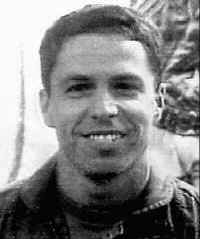
Name: Michael Scott Speicher
Rank at Loss/Branch: Lt.Cdr./US Navy
Rank in 2002: Commander
Unit: USS SARATOGA
Age at Loss: 33,
Born: July 12, 1957
Home City of Record: Jacksonville FL
Date of Loss: 17 January 1991
Country of Loss: Unknown
Loss Coordinates:
Original Status: Missing in Action
Status Changed to KIA/BNR May 1991 Status changed BACK to MIA 01/10/01
In the book "No One Left Behind" written
by Amy Waters Yarsinske on page 280 and 281 are the following statements.
"On March 20,
2002, a special session of the Senate Select Committee on Intelligence was
held, chaired by Senator Pat Roberts. Perhaps frustrated at the Pentagon's
beginning to circle the wagons and deny the leaking intelligence about the
Speicher case being reported in the press throughout the beginning of the
year, Roberts called in CIA Director George Tenet and DIA Director Vice
Admiral Tom Wilson to testify yet again on the Speicher case. Roberts was
making no bones about the situation. He wanted an answer for the record, and
would brook no ambiguity in the matter.
Directing his oratory at Tenet and Wilson, he pointedly asked the question
that was on everyone's lips: "Given all the information in your
possession, Is Scott Speicher alive today? Tell us all now," he demanded.
There
was silence. Tenet and Wilson paused. Roberts waited. "Yes, he is they
replied."
On Jan. 17, 1991, the first night of Operation Desert Storm, Lt. Cmdr.
Michael Scott Speicher took off from the flight deck of the USS Saratoga
in his F/A-18
Hornet. He was the first casualty of the war and was never seen
alive again. For years, the U.S. Navy maintained
that he'd been shot down by
a surface-to-air missile. His wingmen swore it was an
Iraqi MiG fighter. At the outset, the only thing anyone knew for
sure was that he -- or his remains -- were missing in action.
At that time, Steve Dwyer was serving with the 82nd Aviation Brigade as
an operations research systems analyst, stationed near the small Saudi
Arabian town of Rafha, near the border with Iraq. ...
From Salem-News.com APRIL 17, 2013
Watch the special program Saturday, April 20, noon EST;
repeat airing Sunday, April 21, 11 a.m. EST on cable
C-SPAN stations.
(NORFOLK, Va.) - C-SPAN will break story April 20 about
“An American in the Basement”, a investigation Into What
Happens to Americans Missing in Action and/or Prisoners
of War, Framed by the Real-life Story of Captain Scott
Speicher
Author Amy Water Yarsinke, a veteran author of more than
55 non-fiction books on American history, military and
current affairs. She is known as “the POW Hunter” due to
her experience in military intelligence.
An American in the Basement is an expose about the
betrayal of Captain Scott Speicher and the cover-up of
his death, according to the author. C-SPAN will explore
this detailed investigation for the first time, as
author Amy Yarsinke warns that this story is for every
parent, family member or enlisted person about the
promises made by the U.S. Forces to search, locate,
assist and recover all alive prisoners of war and
missing in action.
“The public has been shielded from the ugly truth of the
Speicher case and others like it,” said Ms. Yarsinke.
“This book bares the truth in a way that Washington has
actively tried to prevent.”
The story of navy Captain Michael Scott Speicher begins
when he became the first American service man shot down
in the 1991 Iraqi conflict. The book documents what
happened, from beginning to end, with new documentation
and eyewitness accounts that confirm Speicher was alive
and captured during that war, but “forgotten” and left
to behind to die. The book also examines in great detail
the war of words used by the armed services to define
those it will bring home, and those it will choose to
ignore.
National Alliance of Families
For the Return of America’s Missing Servicemen
World War II + Korea + Cold War + Vietnam + Gulf Wars +
Afghanistan
Janella Apodaca Rose – 406-652-3528
Lynn O’Shea ------------ 718-846-4350
Scott Speicher 20 Years Later – This past week marked the
20th anniversary of the 1st Gulf War. It
also marked the shoot down of the 1st casualty of
that war, Navy Lt. Michael Scott Speicher. For 18 plus years,
we wondered; what really happened to Scott Speicher.
These are the absolute facts of the case. He was shot down.
There was no search operation to recover Lt. Speicher. Yet, his
family was told there was. Less than 24 hours after his shoot
down, Secretary of Defense Richard Chaney, with the Chairman of
the Joint Chiefs of Staff, Colin Powell, by his side announced
Scott Speicher was dead. The official declaration of death
followed in May of 1991.
For years speculation surrounded the Speicher case. There were
live sighting reports, some from as early as late 1991. There
was the report of a pilots “Escape and Evade” symbol found in
overhead imagery, near the Speicher crash site. U.S.
Intelligence Agencies in an unclassified summary titled
"Intelligence Community Assessment of the-Lieutenant Commander
Speicher Case" concluded; “we assess LCDR Speicher was either
captured alive or his remains were recovered and brought to
Baghdad.”Then, there
were the initial MSS found on the wall of a Baghdad prison. All
provided tantalizing clues pointing to Speicher’s survival.
In spite of the intelligence, much of it classified, the Defense
POW/MIA office was in debunk overdrive. There position;
Speicher did not survive the crash. In the years after 1991,
Speicher went from dead to Missing in Action, and back to dead,
then back to Missing in Action then Captured and finally back to
Missing in Action. As his status continued to change Speicher
rose in rank.
Hopes for Speicher’s return, alive, ended in August of 2009.
Search teams, led by a local Iraqi, recovered remains identified
as now Captain Scott Speicher.
A Press Release issued by the Department of Defense stated:
“Acting on information provided by an Iraqi citizen in early
July, US Marines stationed in Al Anbar Province went to a
location in the desert which was believed to be the crash site
of Captain Speicher's jet. The Iraqi citizen stated he knew of
two Iraqi citizens who recalled an American jet impacting the
desert and the remains of the pilot being buried in the desert.
One of these Iraqi citizens stated that they were present when
Captain Speicher was found dead at the crash site by Bedouins
and his remains buried.”
In an interview with Pamela Hess of the Associated Press Thomas
Brown, chief of the Intelligence Community POW/MIA analytic cell
at the Defense Intelligence Agency said "He wasn't captured or
tortured.”
Once Again, DIA Got it Wrong.
#######################
Speicher Family Representative Speaks Out… Finally – In an
interview with Jeannie Blaylock of First Coast News Buddy Harris,
husband of Speicher’s widow Joanne, told the reporter he is bothered
by that fact that “people believe Scott Speicher was killed the
night he was shot down in Iraq.” Harris went on to discuss a 200
page forensic report, detailing the process used to identify remains
recovered as Capt. Speicher.
The following is excerpted from a First Coast News Chanel 25 report
of January 17th, 2011.
[Begin Excerpt] “….Harris met for a week with a 10-member
forensics panel comprised of experts, he said, including "the
leading DNA specialists" from civilian and military fields. The
secretary of the Navy released the 200-page report, which is mostly
classified.
The report dates back to Nov. 12, 2009 but was basically "glossed
over" by the media, said Harris. Harris said Speicher was shot down
50 miles from a chemical weapons plant in Iraq. The forensic panel
had more DNA tests run on Speicher's flight suit, which was
found mostly intact in 1995. Again the DNA tests showed "no
blood," Harris said, indicating the pilot did survive the crash.
It also shows new DNA testing on dental remains indicate Speicher
could not have been killed Jan. 17, 1991, when he was shot
down. The report does not pinpoint an exact day of death but
uses the words, "homicide by undetermined means." Harris called
the wording "interesting."
More remains were found than the media has reported, including a
skull, which has been almost fully reconstructed, Harris said.
The forensic report also says "seven vertebrae" and "four rib
fragments" were found.
The time Speicher actually died is important, Harris said, because
many have criticized the military for not searching for Speicher
effectively or at all. He said he believes, in fact, Speicher was
alive….
….Knowing Speicher may have been alive for years is harder on the
family, said Harris. At first, it was told Speicher was killed
instantly and probably didn't even know what happened to him.
If Speicher did survive for weeks or months or years, though, where
was he? Harris said more credible sources from Iraq are coming
forward now, and the "nut cases" - people who just wanted a free
ride to America with fake information - have faded away.
Now, Harris said, they're hearing that people saw Speicher, possibly
in a series of underground houses or jails Saddam Hussein had
underground in Tikrit.
Harris said he has learned Hussein thrived on a feeling of "power"
from having things no one else had, from people to antiques. He also
believes Speicher might have been considered a pawn or a spy.
As for mysterious sightings of the initials "MSS" in Iraq? Harris
said the "MSS" was found on a prison wall and also on a beam at a
former Iraqi Air Force training facility.
The letters might indicate "Michael Scott Speicher," but there is
still no proof of authenticity. However, Harris said he's never
spoken in public about this, but he did find the initials "MSS"
written once on Speicher's military paperwork before he went to
Iraq. Speicher made a note that it should be saved because it might
be important someday….” [End Excerpt]
###################
Scott Speicher survived his crash. He did what he was trained to
do. He put down his pilots escape and evade signal and waited for
his country to come and get him. How long did he wait near the
crash site? Did he wonder the desert, in search of Allied forces?
When was he captured? How long did he survive? Was it days, weeks,
months or years?
Lastly, why did DPMO continually deny his survival? In a letter to
the National Alliance of Families dated 19 July 1999, the following
information was provided by DPMO;
“The condition of the flight suit and life support equipment
suggests the pilot was probably severely injured or dead when these
items were removed.”
Yet, in his interview Buddy Harris said the flight suit showed “no
blood.”
####################
11/28/2009
Twists and turns snagged missing pilot case
By PAMELA HESS (AP) – 34
minutes ago
WASHINGTON — Saddam Hussein was telling the truth, this time. The
United States just didn't believe him.
So it took the most powerful military in the world 18 years to find
the remains of the only U.S. Air Force pilot shot down in an aerial
battle in the 1991 Gulf War.
Michael Scott Speicher's bones lay 18 inches deep in Iraqi sand, more
or less right where a group of Iraqis had led an American search team in
1995......
============================================= National Alliance of Families
11/18/2009
The article, published by the Associated Press, is
the Defense Intelligence Agency’s version of the Scott Speicher case.Speicher was dead at the crash site.The first
two sentences, of the article, say it all.“Saddam
Hussein was telling the truth, this time. The
United States
just didn't believe him.”
Left out of the DIA version is any mention of a forensic report that
might answer some questions.They would have us
believe the Intelligence Community Assessment in the Speicher Case is
based solely in not believing Saddam
Also questioned is the reference, in the article, to the section of the
wall containing the initials M S S, found in a
Baghdad
prison cell?According to the article the section of
the wall was removed and taken to the
United States
.On June 27, 2003, representatives of DPMO
were asked about this wall during a Q&A at the
Alliance
meeting.We were told the section of the wall
containing the initials M S S was in the
United States
undergoing testing.
A couple of weeks later, on July 7th, Senator Bill Nelson was
photographed examining the cell and the initials on the wall.A member of Nelson’s staff confirmed the cell was intact when
Nelson examined it.You can read about this at www.nationalalliance.org/gulf/infomis.htm
If that section of cell wall was brought to the
U.S.
, the question is when did that happen?
Speicher Hailed as Hero, Laid to Rest in Hometown
Story Number: NNS090814-23
Release Date: 8/14/2009 6:36:00 PM
By Mass Communication Specialist 2nd Class Daniel Gay, Naval Public
Affairs Support Element East, Detachment Southeast
JACKSONVILLE, Fla. (NNS) -- Thousands of people, both military and
civilians, showed their respects as the remains of the first casualty of
Desert Storm, Capt. Michael Scott Speicher, were brought to Naval Air
Station (NAS) Jacksonville after being found in Iraq after 18 years.
The remains arrived at the NAS Jacksonville flight line Aug. 13 and were
then taken by motorcade to All Saints Chapel on base, where they
remained overnight for people to give their final respects for the
fallen Navy pilot......
Funeral arrangement have been finalized for Captain Scott
Speicher, the local navy pilot who's body had been missing since the
start of the first Iraq War, 18 years ago.
The public memorial for Captain Speicher will be held on Friday,
August 14th, from 9am - 9:45am at the Jacksonville Veteran's
Memorial Wall on East Adams Street. .....
I have received quite a few messages from people who would
like to return their Captain Michael Scott Speicher POW/MIA bracelets to
the family.
I have heard from Captain Speicher's family today and they have asked
that you send them as soon as possible.......they will be buried with
Captain Speicher.
I am sending two of my own, one for each of his children. To know that
the bracelets that I have worn for seven years will be buried with
Captain Speicher is a great honor to me!
Please send them to the following address, and please do this as quickly
as possible as we may only have seven days or so from today to get them
to Jacksonville, FL.
The address is:
Bob Beuhn, Division Chief
Military Affairs, Veterans and Disabled Services
Recreation and Community Services Department
City of Jacksonville
City Hall, 117 West Duval Street, Suite 175
Jacksonville, FL 32202
If I get any other updates, I will send them out ASAP!! Please keep
Captain Speicher's family in your prayers!
IMMEDIATE RELEASENo. 590-09
August 07, 2009
Speicher Search Details Announced
The Navy announced today additional details regarding the recent discovery of
the remains of Navy Capt. Michael "Scott" Speicher in Iraq. Speicher
was shot down flying a combat mission in an F/A-18 Hornet over west-central Iraq
on Jan. 17, 1991, during Operation Desert Storm.
Acting in part on information provided by an Iraqi citizen in early July,
Multi National Force – West's (MNF-W) personnel recovery team went to a
location in the desert which was believed to be the crash site of Speicher's
jet. The Iraqi, a Bedouin, was 11 years old at the time of the crash and did not
have direct knowledge of where Speicher was buried, but knew of other Bedouins
who did. He willingly provided his information during general discussion with
MNF-W personnel and stated he was unaware of the U.S. government's interest in
this case until queried by U.S. investigators in July 2009.
The Iraqi citizens led MNF-W's personnel recovery team to the area they
believed Speicher was buried. The area where the remains were recovered was
located approximately 100 kilometers west of Ramadi, in Anbar province. There
were two sites that teams searched. One site was next to the downed aircraft
that was discovered in 1993 and the other site was approximately two kilometers
away. The second site was where Speicher's remains were recovered.
The recovery personnel searched two sites from July 22-29. The personnel
recovery team consisted of approximately 150 people, mostly Marines and other
forces under MNF-W.
The recovered remains include bones and multiple skeletal fragments. Based on
visual examination of the remains and dental records at the site, a preliminary
assessment was reached that the remains were that of Speicher. After searching
the site another day, no further remains were recovered.
On July 30, the remains were turned over from the recovery team to MNF-W
mortuary affairs at Al Asad. The remains were then transported to Dover Port
Mortuary at Dover Air Force Base, Del. They were examined by the Armed Forces
Institute of Pathology's (AFIP) Armed Forces medical examiner who positively
identified them as those of Speicher on Aug. 1.
Positive identification by AFIP was made by comparing Speicher's dental
records with the jawbone recovered at the site. The teeth were a match, both
visually and radiographically. AFIP's DNA Lab in Rockville, Md., confirmed the
remains to be Speicher on Aug. 2 via DNA comparison tests of the remains by
comparing them to DNA reference samples previously provided by family members.
Photos are available at http://www.navy.mil/view_single.asp?id=2934 .
Remains Identified as Navy Captain Michael Scott Speicher
The Armed Forces Institute of Pathology (AFIP) has positively identified
remains recovered in Iraq as those of Captain Michael Scott Speicher. Captain
Speicher was shot down flying a combat mission in an F/A-18 Hornet over
west-central Iraq on January 17th, 1991 during Operation Desert Storm.
"Our thoughts and prayers are with Captain Speicher's family for the
ultimate sacrifice he made for his country," said Ray Mabus, Secretary of
the Navy. "I am also extremely grateful to all those who have worked so
tirelessly over the last 18 years to bring Captain Speicher home."
"Our Navy will never give up looking for a shipmate, regardless of how
long or how difficult that search may be," said Admiral Gary Roughead,
Chief of Naval Operations. "We owe a tremendous debt of gratitude to
Captain Speicher and his family for the sacrifice they have made for our nation
and the example of strength they have set for all of us."
Acting on information provided by an Iraqi citizen in early July, US Marines
stationed in Al Anbar Province went to a location in the desert which was
believed to be the crash site of Captain Speicher's jet. The Iraqi citizen
stated he knew of two Iraqi citizens who recalled an American jet impacting the
desert and the remains of the pilot being buried in the desert. One of these
Iraqi citizens stated that they were present when Captain Speicher was found
dead at the crash site by Bedouins and his remains buried. The Iraqi citizens
led US Marines to the site who searched the area. Remains were recovered over
several days during the past week and flown to Dover Air Force Base for
scientific identification by the AFIP's Office of the Armed Forces Medical
Examiner.
The recovered remains include bones and multiple skeletal fragments. Positive
identification was made by comparing Captain Speicher's dental records with the
jawbone recovered at the site. The teeth are a match, both visually and
radiographically.
While dental records have confirmed the remains to be those of Captain
Speicher, the Armed Forces Institute of Pathology DNA Lab in Rockville, Maryland
is running DNA tests on the remains recovered in Iraq and comparing them to DNA
reference samples previously provided by family members. Results will take
approximately 24 hours.
Navy Changes Speicher Status To 'Missing-In-Action'
Secretary
of the Navy Donald Winter determined today that the status of Capt. Michael
Scott Speicher is changed from "Missing/Captured" to
"Missing-In-Action" (MIA).
This determination was made after a review of available information;
including the report and recommendation of a Status Review Board and
comments provided by the Speicher family, as well as a Defense Intelligence
Agency assessment.
Speicher
was the first casualty of Operation Desert Storm. His F/A-18 Hornet was
downed by hostile action on January 17, 1991, during the first manned air
strike of the war, and he was declared
"Killed-In-Action/Body-Not-Recovered" in May 1991.
His
status was changed in 2001 to MIA, and then to Missing/Captured in 2002
based on sighting reports in Iraq. Those sightings have since been
discredited.
In
October 2008, the intelligence community concluded that Speicher is
deceased, though his remains are unlocated. Based on that assessment,
the Secretary of the Navy convened a Status Review Board to consider whether
Speicher's status should remain Missing/Captured or should be changed.
Other Personnel in Incident: (none missing)
Source: Compiled by Homecoming II Project 09 March 1991 from one or more of
the following: raw data from U.S. Government agency sources, published sources,
interviews. Updated by the P.O.W. NETWORK.
REMARKS: OPERATION DESERT STORM
SYNOPSIS: Scott Speicher was raised in Kansas City. When he was in high
school, the Speicher family moved to Jacksonville, Florida. Scott continued his
education at Florida State University, receiving a degree in accounting and
management.
Speicher went on to join the U.S. Navy and receive flight training. During
the Mid-East Crisis, Speicher was one of 2,500 airmen assigned to the USS
SARATOGA in the Red Sea. Speicher was part of a fighter squadron and flew the
F18 "Hornet" fighter/bomber.
On January 18, 1991, Speicher's aircraft was hit by an Iraqi SAM
(surface-to-air missile) and crashed during the first Coalition offensive of the
war dubbed "Operation Desert Storm." Initial reports by Defense
Secretary Dick Cheney stated that Speicher had been killed. One military source
said reports indicated the aircraft had "exploded to bits" in the sky,
apparently having suffered a direct SAM hit.
Iraqi officials soon announced the capture of American pilots. It was
originally believed the chances of Speicher's ejection were slim, but the books
were not closed on Speicher. He was the first American to be listed Missing in
Action. Most recent media reports indicate that he was probably "confirmed
killed." Although Secretary of Defense Dick Cheney has said Speicher was
killed, he is still officially listed missing in action.
The Methodist church in Florida where Scott Speicher has been a Sunday School
teacher has held prayer and candlelight vigils for his safety. They have not
given up hope that he is still alive.
In the first days of March, 1991, 21 American POWs were released by the
Iraqis. Scott Speicher has not yet been released.
Those who recall the abandonment of American POWs in World War II, Korea and
Vietnam are watching carefully, determined that men like Speicher will be
returned alive, or fully accounted for, before American troops leave the Middle
East when hostilities cease.
Scott Speicher and his wife Joanne have two children, a daughter, age 3, and
a son, age 1. All live in Jacksonville, Florida. Speicher's father, Wallace
Speicher, was a Navy pilot in World War II.
As of July 2005, Michael Speicher is still unaccounted for. Although
the USG has excavated what they believe to have been the plane's crash site, no
remains were found. The USG also stated, prior to the excavation, that all men
were accounted for.
==================================
Navy Board Suggests New Speicher Search Associated Press July 8, 2005
WASHINGTON - A new Navy
review of efforts to determine the fate of missing pilot Capt. Michael Scott
Speicher is recommending that the U.S. government undertake an intensified
search in Iraq
and that his status be affirmed as "missing-captured," Sen. Bill
Nelson wrote in a letter to the Navy's top civilian.
"I urge you to accept the board's recommendation regarding Capt. Speicher's
status. I also encourage you to work to implement the board's recommendation
regarding an intensified search effort," the Florida Democrat wrote to Navy
Secretary Gordon England, who also is the acting deputy defense secretary.....
=============================
09/08/2005
Navy: Iraqis know missing pilot's whereabouts
WASHINGTON (AP) -- A Navy pilot shot down over
Iraq in January 1991 may have been captured by Iraqi forces, and members of the
former Iraqi government "know the whereabouts" of the officer, the
Navy has concluded.
A Navy board of inquiry concluded that there is no credible evidence that
Capt. Michael "Scott" Speicher is dead, and it reaffirmed his official
status as "missing/captured," according to the board's final report.
The board also recommended that the Pentagon work with the State Department,
the U.S. Embassy in Baghdad and the Iraqi government to "increase the level
of attention and effort inside Iraq" to resolve the question of Speicher's
fate.....
JACKSONVILLE, Fla. (AP) -- There are at least eight avenues to explore in
the stepped-up search for information for missing Gulf War Navy pilot Scott
Speicher, Sen. Bill Nelson said Tuesday.
Speicher, a former resident of Jacksonville suburb Orange Park, has been
missing since January 1991, when his FA-18 Hornet was shot
down on the first night of the Gulf War. Speicher may have ejected and may
have been captured by Iraqi forces. His status is currently listed as
"missing in action/captured" by the Navy......
By BEN EVANS, Associated Press Writer Ben
Evans, Associated Press Writer � Sat Jan 3,
12:14 pm ET
Featured Topics:
AP � This a photo of
Michael Scott Speicher made aboard the carrier USS Saratoga in 1990
when he was promoted �
WASHINGTON � The family of a Navy pilot missing since his plane
wwas shot down during the first
Gulf war isn't ready to give up hope that he is alive and say they
will oppose any decision to declare him killed in action.
The Navy has scheduled a review board hearing for Monday on the status of
Capt. Michael "Scott" Speicher, who has been missing since January
1991, when his FA-18 Hornet was shot down in Iraq
on the first night of the Persian
Gulf War........
Continue
Speicher Probe, Panel Says
January
09, 2009
Associated Press
WASHINGTON - A U.S. Navy review board says the Defense
Department should
continue investigating what happened to a fighter pilot who was the first
American lost in the Gulf War almost 20 years ago, saying it is not yet time to
close the case.
The board made the recommendation Thursday after four days of hearings,
according to Buddy Harris, who has represented the family of missing Capt.
Michael "Scott" Speicher. It now goes to the Navy secretary, who has
the final decision......
News is in CHRONOLOGICAL order - Updates
at the bottom

![[]](image001837.jpg)