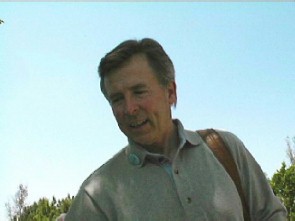
JEFFREY, ROBERT DUNCAN "BOB"![]()
Name: Robert Duncan "Bob" Jeffrey Rank/Branch: O3/US Air Force Unit: 433rd Tactical Fighter Squadron, Ubon AF TH Date of Birth: 23 July 1939 Home City of Record: Los Angeles CA Date of Loss: 20 December 1965 Country of Loss: North Vietnam Loss Coordinates: 212500N 1063700E Status (in 1973): Returnee Category: Acft/Vehicle/Ground: F4C Missions: 1 Other Personnel In Incident: George I. Mims, Jr. (missing)
Source: Compiled by Homecoming II Project from one or more of the following: raw data from U.S. Government agency sources, correspondence with POW/MIA families, published sources, interviews. Updated by the P.O.W. NETWORK
REMARKS: 730212 RELSD BY DRV
SYNOPSIS: 1Lt. George I. Mims was the weapons systems operator of an F4C Phantom jet which was one of four F4Cs flying "MIG cover" for F105's bombing a bridge on the northeast railroad out of Hanoi into China. Capt. Robert D. "Bob" Jeffrey was his pilot on the mission.
During the flight, Jeffrey's aircraft took what appeared to be a direct hit and other flight members felt sure that there was no chance of survival for either. Only small pieces of the airplane were seen to emerge from the fireball. George Mims had been married only a month, and Bob Jeffrey had a baby son.
When 591 Americans were released from Vietnam in 1973, George Mims was not among them, but his pilot, Bob Jeffrey was. No substantial information has surfaced on Mims since his plane went down. The Vietnamese deny any knowledge of his fate.
Since the war's end, the U.S. Government has received thousands of reports of Americans still in captivity in Southeast Asia. This large volume of evidence suggests that hundreds are still being held.
Henry Kissinger predicted, in the 50's, that future "limited political engagements" would result, unfortunately, in nonrecoverable prisoners of war. This prediction has been fulfilled in Korea and Vietnam, where thousands of men and women remain missing, and where ample evidence exists that many of them (from BOTH wars) are still alive today. The U.S. Government seems unable (or unwilling) to negotiate their freedom. The "unfortunate" abandonment of military personnel is not acceptable, and the policy that allows it must be changed before another generation is left behind in some faraway war.
George I. Mims, Jr. was promoted to the rank of Captain during the period he was maintained missing.
SOURCE: WE CAME HOME copyright 1977 Captain and Mrs. Frederic A Wyatt (USNR Ret), Barbara Powers Wyatt, Editor P.O.W. Publications, 10250 Moorpark St., Toluca Lake, CA 91602 Text is reproduced as found in the original publication (including date and spelling errors). UPDATE - 09/95 by the P.O.W. NETWORK, Skidmore, MO
ROBERT D. JEFFREY Major - United States Air Force Shot Down: December 20, 1965 Released: February 12, 1973
Bob Jeffrey grew up in Los Angeles, became an Eagle Scout, graduated from Northrop Institute of Technology, and went into the Air Force Cadet program. He was a distinguished graduate and chose to fly the F102 Delta Dagger. He was stationed at Perrin AFB in Sherman, Texas, and then lived in the Philippines for two and a half years and en enjoyed traveling in the Far East. In the summer of 1964 he was transferred to California where Bob checked out in the F4C and Billy was born. He spent his spare time flying private airplanes, surfing, playing golf and tennis.
On December 20, 1965, Major Jeffrey was shot down on his third day in Viet Nam ... his FIRST mission. His only son, Bill, was ten months old. That little boy would spend eight Christmases without his father.
Bob was commanding a Phantom F4C when it took a direct hit. His wife was delivered a two-page telegram four days before Christmas informing her that he was "missing in hostile territory." Later she was unofficially advised by his wingman and other military friends that he was almost certainly dead.
However, when the warning lights had gone on in Bob's aircraft, he had endeavored to pull the ejection flap, but due to gravity forces he found he could not raise his hands. He finally reached an alternate ejection handle and then blacked out. About 200 feet above ground his chute was opened. The North Vietnamese were shooting at him from a field below. Capture was immediate. "They tied my hands behind my back and took my suit ... they could not find the zippers. By accident they inflated my life preserver water wings! They all jumped back."
A long truck ride followed to the Hanoi Hilton where he became the sixtieth prisoner to take up residence. Time passed slowly. Bob would be in eight prison camps in seven long years. Yet it was amazing what the men did with their few resources. Broken tiles from prison roofs were used as chalk to draw pictures on the floor. The men found the tile contained different pigments; a practice guitar keyboard was made from laminated paper, cloth, and strips of bamboo. The goal was to stay mentally alive. When possible, classes were formed. All knowledge was exchanged. Bob taught French, Spanish, German and lectured - on his favorite sports of archery and surfing. Using his own hair and a stick, Bob even made a paint brush and used whitewash from the walls as a source of ink.
Hungry for knowledge in such tight isolation, the prisoners were elated to learn of the Apollo 11 lunar landing from a picture on a sugar packet sent from home. This news was a year late in reaching them. Bob returned with this message for America. "I would like to take this opportunity to thank my fellow countrymen for the beautiful experiences I have had since my homecoming and to tell them how wonderful it is to be back in America again."
"The thousands of deep, compassionate letters filled with love and sincerity were a testimony to the concern for us and our return. I wish to answer each individually and I hope you will be patient and understanding until I can."
"I have felt the love of the people to whom I have spoken and the communities that have hosted me and my family; it has deepened my love for them and for my country. I have found my experience has broken down all barriers of race, creed, or religion - that I can relate freely with others as they can with me. I thank the countless selfless people and organizations who have devoted tremendous amounts of effort to obtain the honorable realease of the prisoners."
"I would especially like to publically express my respect and appreciation to my wonderful wife, Joy, who devoted the past years of her life to securing my return and the return of my fellow prisoners. She started her work as a member of the first group of wives to go to Paris in Sept. 1969 to meet with the North Vietnamese delegation and ended it by serving as the Texas State Co-ordinator for The National League of Families. She helped start a movement which ultimately resulted in greatly improved treatment for the prisoners as well as the saving of men's lives."
"In addition to these efforts, she managed to find time to raise a well adjusted, loving son who knew and loved me when I returned from Vietnam although he had only been ten months old when I left. I thank the good Lord for them and my countless other blessings."
"I feel that I am a better man for my experiences and I hope that our country is a better nation for our sacrifices and our return."
Since his release Bob has taken tests in French, German, and Spanish for college credit at SMU. He studied all three of these languages in prison camp. He has received 21 credits for the knowledge acquired there. He is attending SMU for thirty-six months through a program with the USAF and is holding a 4.0 average.
December 1996 Robert Jeffrey retired from the United States Air Force as a Lt. Colonel in January, of 1980. He and his wife Jean reside in Texas.
January 02, 1997
Really enjoyed the Christmas recollections. Thought I'd add mine.
I was shot down 20 Dec 65 arriving at the Hilton the next day. I was pretty banged up but nothing serious. Burns, the usual crushed vertabrae, shrapnel grazes, cuts, etc. My eyes were blood red and I couldn't focus on anything or see very well. After the usual Welcome Wagon treatment (torture), I was put into New Guy Village. It was a cell block that was a dead end corridor with only one entrance. I was in the room next to the door. A shower room was across from me. There were about six other rooms in the block filled with the greats. Robbie (Risner) was next to me, then Jim Stockdale, Larry Guarino, and I think Jerry Denton. I was assigned clearing duties even though I couldn't see very well. But I could stand on my bunk and look through a hole in the transom and tell if a guard was approaching.
Robbie taught me the tap code and we practiced during the day. That evening, the meal showed up. This was to be my first regular meal as I hadn't been given much up to this time, nor did I feel like eating. The guard opened the door and shoved in a stack of ceramic bowls stacked on top of each other with a loaf of bread resting on top. After the door closed, I unstacked the bowls and inspected the contents of each. I didn't recognize a thing in them, nor did the contents look edible to me, so I passed.
After a while, I heard Robbie calling me. I went to the transom and he asked if I had eaten. I told him I wasn't hungry. He passed a wire, with a loop string on the end, to tie my bread to. He reeled it in and I asked him if the food was always this sh---y. He paused a second and said, "It's Christmas and this is a SPECIAL MEAL." All I could say was "Oh!"
The next day I realized how special that meal had been.
Bob Jeffrey